What are the symptoms of PTSD, and how do you recognize them?
Nightmares, flashbacks, always on guard, pulling away. Learn the four groups of PTSD symptoms in veterans and others, how common it is and what helps.
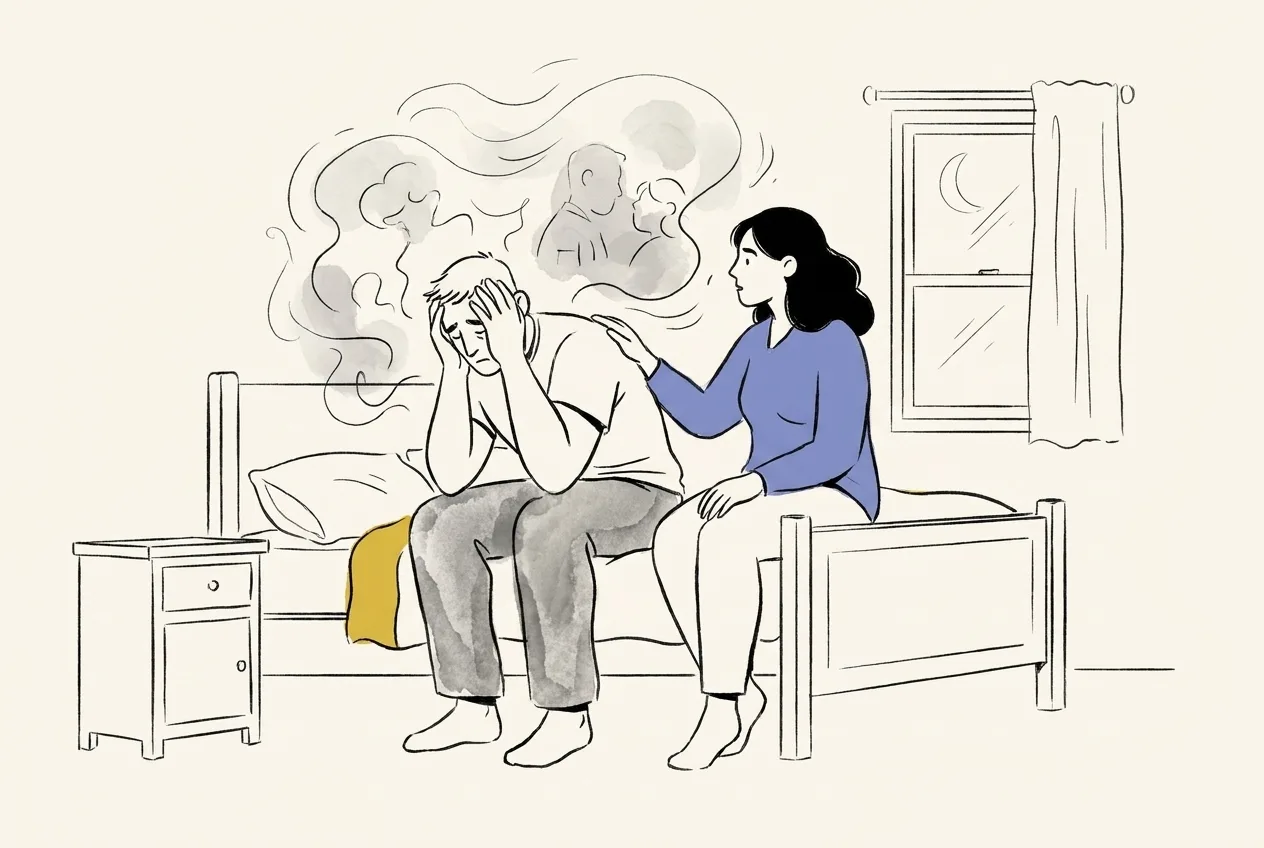
PTSD (post-traumatic stress disorder, post-traumatic stress) — a mental health condition that can develop after a traumatic event, marked by intrusive memories, avoidance, negative changes in thoughts and mood, and constant alertness, lasting more than a month and interfering with daily life.
PTSD is a condition that can develop after a terrifying or life-threatening experience — combat, assault, a disaster or a serious accident. Its four core symptom groups are reliving the event, avoiding reminders, negative changes in mood and thinking, and feeling constantly on edge. Most people who go through trauma do not develop PTSD, and those who do can recover: trauma-focused therapies have the strongest evidence.
- Most people exposed to trauma recover without developing PTSD.
- Symptoms must last more than a month and disrupt daily life to be diagnosed as PTSD.
- Trauma-focused psychotherapies are the first-line treatment.
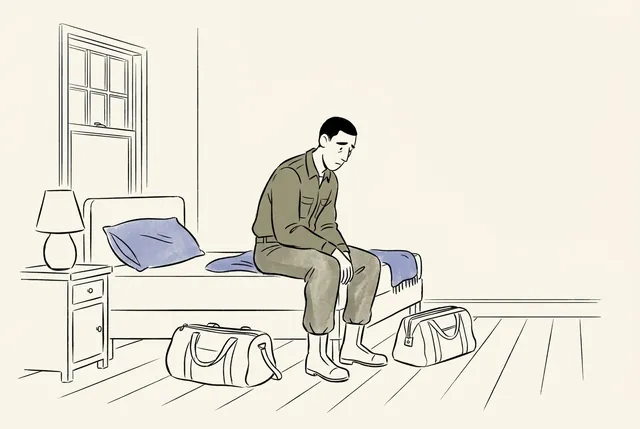
He jumps at loud noises. She sits with her back to the wall in every restaurant. He hasn’t slept through the night since he came home. These can be signs of post-traumatic stress disorder (PTSD).
What are the four groups of PTSD symptoms?
Jonathan Bisson and colleagues describe four clusters of PTSD symptoms 1:
- Re-experiencing: intrusive memories, flashbacks, nightmares, intense reactions to reminders.
- Avoidance: staying away from people, places, conversations or thoughts that bring the trauma back.
- Negative changes in thoughts and mood: guilt, shame, blame, numbness, losing interest, feeling cut off from loved ones.
- Hyperarousal: being constantly on guard, jumpy, irritable, angry, having trouble sleeping or concentrating, reckless behavior.
PTSD is diagnosed when symptoms last more than a month and get in the way of daily life.
How common is PTSD?
Ronald Kessler and colleagues analyzed World Health Organization surveys of more than 68,000 adults in 24 countries 2. Most people experience at least one traumatic event in their lifetime, but only a small minority develop PTSD. Risk depends heavily on the type of trauma: interpersonal violence, combat and sexual assault carry higher risk.
The VA’s National Center for PTSD estimates that about 6 in 100 Americans will have PTSD at some point in their lives, and rates are higher among veterans who served in combat zones.
How does PTSD affect the family?
PTSD affects everyone at home. Partners may feel they’re walking on eggshells, kids may not understand why Dad gets angry or Mom doesn’t want to go to the game. Emotional numbing can feel like rejection. See Secondary trauma in military families.
What helps with PTSD?
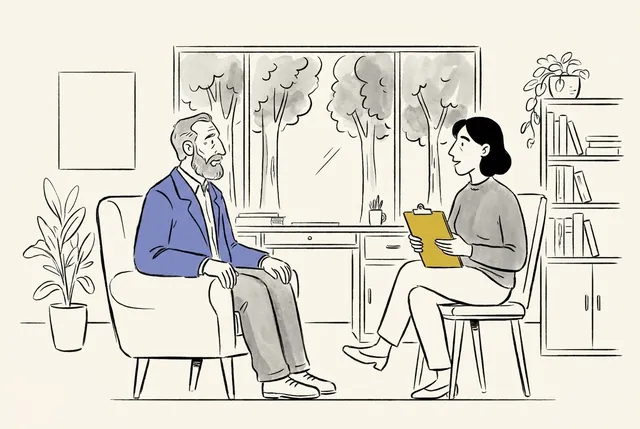
According to Bisson’s review, the best evidence is for trauma-focused psychotherapies — such as Prolonged Exposure, Cognitive Processing Therapy and EMDR 1. Some medications also help. Read more in How PTSD is treated.
Where do you start if you think you have PTSD?
- Veterans Crisis Line: dial 988, then press 1, or text 838255 — for veterans, service members and their families.
- VA mental health care or your local Vet Center (readjustment counseling for eligible veterans and families).
- Military OneSource (800-342-9647) for active-duty families.
- The VA’s free PTSD Coach app has tools for managing symptoms.
Frequently asked questions
Can PTSD appear years after deployment?
Yes. Symptoms sometimes start or worsen months or years later, often triggered by new stress, retirement or another loss.
Do I need to be enrolled in VA care to get help for PTSD?
No. The Veterans Crisis Line (988, then press 1) is open to all veterans and their families, and Vet Centers offer counseling to many combat veterans regardless of VA enrollment.
Sources
- Bisson, J. I., Cosgrove, S., Lewis, C., & Roberts, N. P. (2015). Post-traumatic stress disorder. BMJ, 351, h6161. doi:10.1136/bmj.h6161
- Kessler, R. C., Aguilar-Gaxiola, S., Alonso, J., Benjet, C. та ін. (2017). Trauma and PTSD in the WHO World Mental Health Surveys. European Journal of Psychotraumatology, 8(sup5), 1353383. doi:10.1080/20008198.2017.1353383
Evidence-based · Human-centered · Practical — how we write and fact-check our articles.
This article is for educational purposes and does not replace advice from a licensed professional. We cite original research and update articles when new evidence appears. Spotted an error? Let us know — see our editorial policy.
If you or someone you love is in crisis, call or text 988 (Suicide & Crisis Lifeline). Veterans: dial 988, then press 1.